The Meltemi Wind: What It Is, When It Blows and What It Means for Naxos
The meltemi is the strong, dry north wind of the Aegean Sea, the wind that shapes every summer on Naxos. It keeps the hottest days bearable, clears the sky to a deep blue and brings kitesurfers from all over Europe to Mikri Vigla, but it can also make the sea rough and delay ferries. This guide explains what the meltemi is, when it blows, how strong it gets and how to plan your beach days around it.
Key takeaways
- The meltemi, known in ancient times as the etesian winds, is a dry north wind that blows in the Aegean from about mid May to mid September.
- It is strongest in the afternoon and often drops at night, but it can also blow for several days without a break.
- At its peak it can reach force 7 to 8 on the Beaufort scale, which can stop small boats and delay some ferries.
- On Naxos, average wind speeds rise from about 21 to 23 kph in May and June to 28 to 29 kph in July and August, then ease to about 23 kph in September.
In this article
What the meltemi is
The meltemi (plural meltemia) is a seasonal wind of the Aegean Sea. The ancient Greeks called these winds the etesians, from the Greek word for year, because they return every summer. The modern name is thought to come from the Italian for bad weather, although the meltemi usually blows under a clear, sunny sky.
It forms because of the difference in pressure between high pressure over the Balkans and a large area of low pressure over Asia Minor and the eastern Mediterranean. The air it brings is dry, which is why meltemi days are so bright and why the wind makes the summer heat far more pleasant.
When the meltemi blows
The meltemi season runs from about mid May to mid September, and in some years stronger northerlies continue into early October. Lighter north winds often appear in May and early June, then the wind builds and reaches its peak in July and August.
On a typical meltemi day the wind picks up during the late morning, is strongest in the afternoon and eases in the evening. Sometimes, however, it blows for several days in a row without stopping.
Average wind speeds on Naxos by month show the pattern clearly:
- May: about 21 kph
- June: about 23 kph
- July: about 28 kph
- August: about 29 kph
- September: about 23 kph
- October: about 23 kph
See our guides to Naxos in May, Naxos in September and Naxos in October for the full weather picture of each month.
How strong it gets and which way it blows
Most days the meltemi is a steady, fresh breeze, but at its strongest it can reach force 7 to 8 on the Beaufort scale. In the central Aegean, where Naxos lies, it blows mainly from the north, while further south it turns more to the northwest.
Because it arrives in clear weather, it can build up without much warning. Sailors take it seriously, small boats often stay in port on strong days, and some ferry routes can be delayed or cancelled.
What the meltemi means for your holiday on Naxos
- Cooler days: the wind takes the edge off the heat, especially in July and August.
- Clear skies: meltemi days are usually cloudless, with excellent visibility towards Paros and the other islands.
- Rougher sea: exposed beaches can have waves and blowing sand in the afternoon.
- Ferries and boat trips: on very windy days, check your ferry and plan a spare day before an important flight.
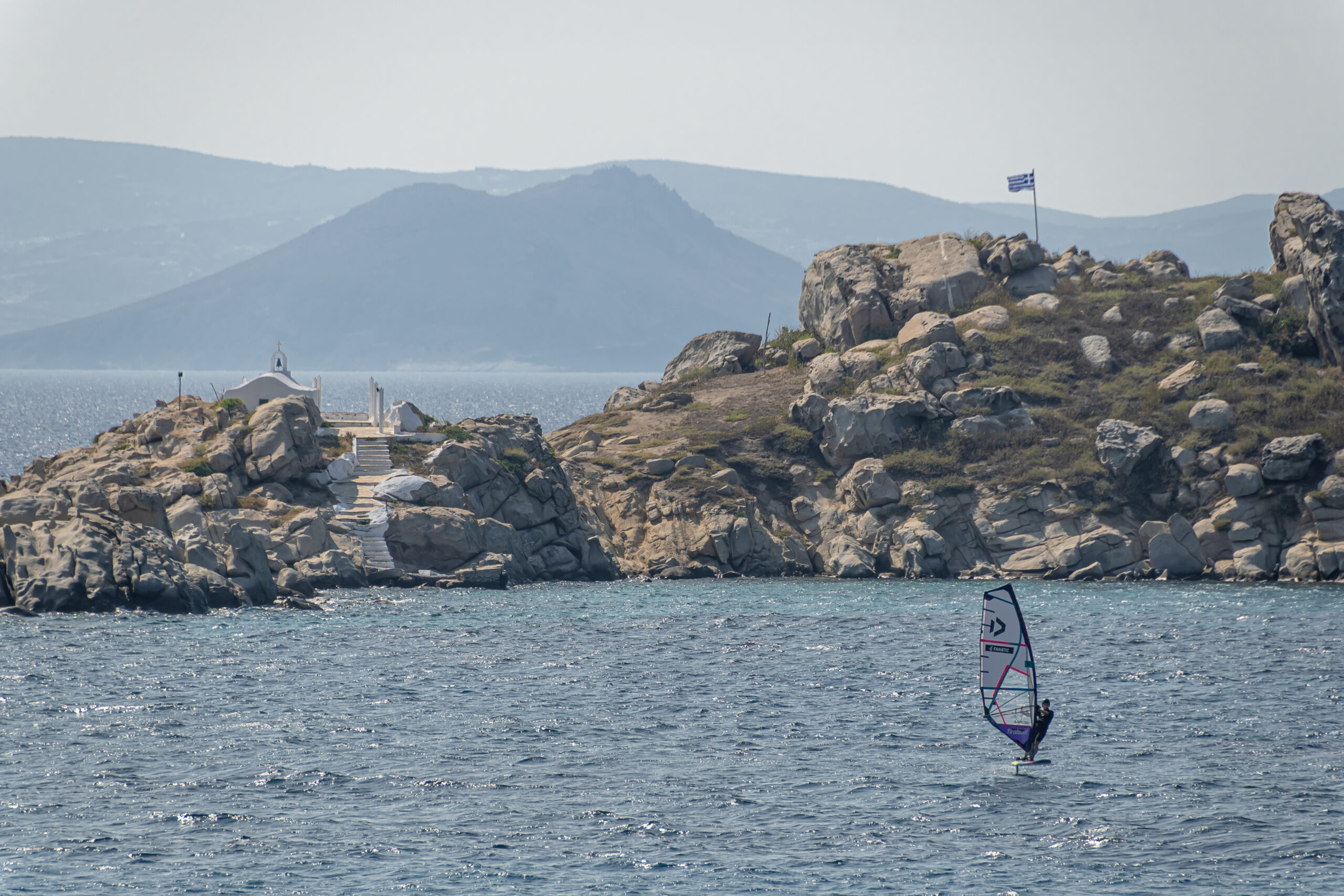
- Great for wind sports: steady wind is exactly what kitesurfers and windsurfers come for.
Where to swim when the meltemi blows
On windy days, choose a beach that is protected from the north. On the southwest coast near Mikri Vigla, Pyrgaki sits in a bay sheltered from the northern winds, and the small coves of Alyko, surrounded by cedar trees, are also a good choice.
Long open beaches such as Kastraki and Orkos are more exposed, so they are best on calm days or early in the morning. At Mikri Vigla beach, the shallow north bay is lovely for a morning swim, and when the wind picks up it becomes the kite and windsurf zone.
The meltemi and kitesurfing at Mikri Vigla
For kitesurfers and windsurfers, the meltemi is the main attraction. Mikri Vigla is one of the best known wind sport spots in Greece because the summer wind is steady and the north bay has shallow, flat water that suits both beginners and experienced riders. The schools and rental centres are right on the beach. Our kitesurfing and windsurfing guide covers the spot, the schools and a realistic week of riding.
Tips for a windy day
- Check a wind forecast the evening before and plan your beach accordingly.
- Swim in the morning, before the wind picks up.
- Bring a windproof layer for the evening and for boat trips.
- Secure umbrellas well, or use the natural shade of cedar trees at Alyko and Pyrgaki.
- Keep a flexible day in your plans for ferries, especially in August.
Frequently asked questions about the meltemi
What is the meltemi?
The meltemi is a strong, dry north wind that blows in the Aegean Sea in summer. The ancient Greeks called it the etesian wind because it returns every year.
When does the meltemi blow?
From about mid May to mid September, with its peak in July and August. It is usually strongest in the afternoon and weaker at night.
How strong is the meltemi?
It is often a fresh breeze, but on the strongest days it can reach force 7 to 8 on the Beaufort scale, which can affect small boats and ferries.
Where can I swim on Naxos when the meltemi blows?
Choose beaches protected from the north, such as Pyrgaki and the coves of Alyko on the southwest coast, and swim early in the morning before the wind picks up.
Sources
By the team at Studios Kontos, Mikri Vigla, Naxos. We write about what we live every day on the island.